
1 Killing site(s)
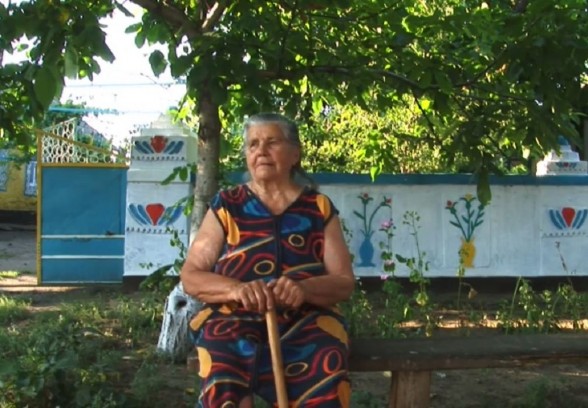
Olena V., born in 1929: "The Jews were brought here in the winter of 1942. They were put into buildings from the old farm: the sheepfold, the barns, the stables. It was very cold. They slept on a little straw that the villagers brought. Some of them, especially the elderly, died from the cold and from hunger.
We tried to bring them food. Some policemen let us do it, but others would throw the food on the ground and beat us.
They stayed there for several weeks, maybe even a few months, but not very long. There was still snow on the ground when they were taken to the ravine and shot.
The bodies were burned afterward. The smell spread through the whole village. It was unbearable." (Testimony N°YIU356U, interviewed in Ivanivka on July 25, 2006)
"[…] Approximately 180 Jews were locked in the stables of our village in January 1942. […] One night in February 1942, the policeman Georgii Zh., together with two other local policemen and three German policemen, entered the stables and began beating and robbing the Jews. I heard them groaning and screaming. I also heard the voice of policeman Zh. demanding gold, clothing, and watches from them.[…]
In addition, a column of about 200 Jews passed through our village on its way to the Bolshevik kolkhoz; […] those who refused or were unable to continue walking were beaten.[…]
In March 1942, the Jewish detainees were shot in our village. On the eve of the execution, Zh. took several dozen Jews out of the stable and, beating them with a truncheon, drove them into a field where they were forced to pull up hemp and stack it into piles intended for burning the bodies. The following day, Zh. drove the Jews out of the stable, beating them with a truncheon as he led them to the execution site. […] " [Interrogation record of the witness Siniakova Anna Emelyanova from Yanchelovo, born in 1912, taken in Veselinovo on September 7, 1944; SBU criminal files; Archive No. 4152, delo 1777, pp. 117-118]
"[…] Question: In February 1942, a column of 180 to 200 persons of Jewish nationality arrived in Yanchelovo [today Ivanivka]. You were guarding them in a stable, did not allow them to leave, and did not permit the villagers to bring food to these Soviet citizens condemned to death. […]
Answer: A column of approximately 150 persons of Jewish nationality arrived in our village, of whom 30 were transferred to Novovoskresenka, 50 to Buzovarovo, and 70 remained in our village of Yanchelovo. […]" [Interrogation record of the accused Zhorzh Ivanovich Zh., born in 1924., a policemen tried for participation in mass shootings, taken in Veselinovo on October 12, 1944; SBU criminal files; Archive No. 4152, delo 1777 p. 92]
"[…] During the German Romanian occupation of the commune of Novo-Voskressenka [today Novovoskressenka], from 12 August 1941 to 29 March 1944, the following crimes were committed:
– At the very beginning of March 1942, an SS detachment led by the German officer Ronamus Chaff arrived in the village of Yanchelovo [today Ivanivka], from the commune of Novo-Voskressenka, and took 50 Jews outside the village. Nine people were shot; the others were looted and locked again in the stable. They were shot later. In total, in the village of Yanchelovo, 210 persons of Jewish nationality were shot, many of them children under 14 years of age. The bodies of those shots were thrown into a ravine in which a pyre of hemp soaked with flammable liquid had been prepared in advance. The dead as well as the wounded were burned there. […]" [Act No. 3 drawn by State Extraordinary Soviet Commission (ChGK), on June 18, 1944; p. 405–407; GARF 7021-68-178/Copy USHMM RG.22-002M]
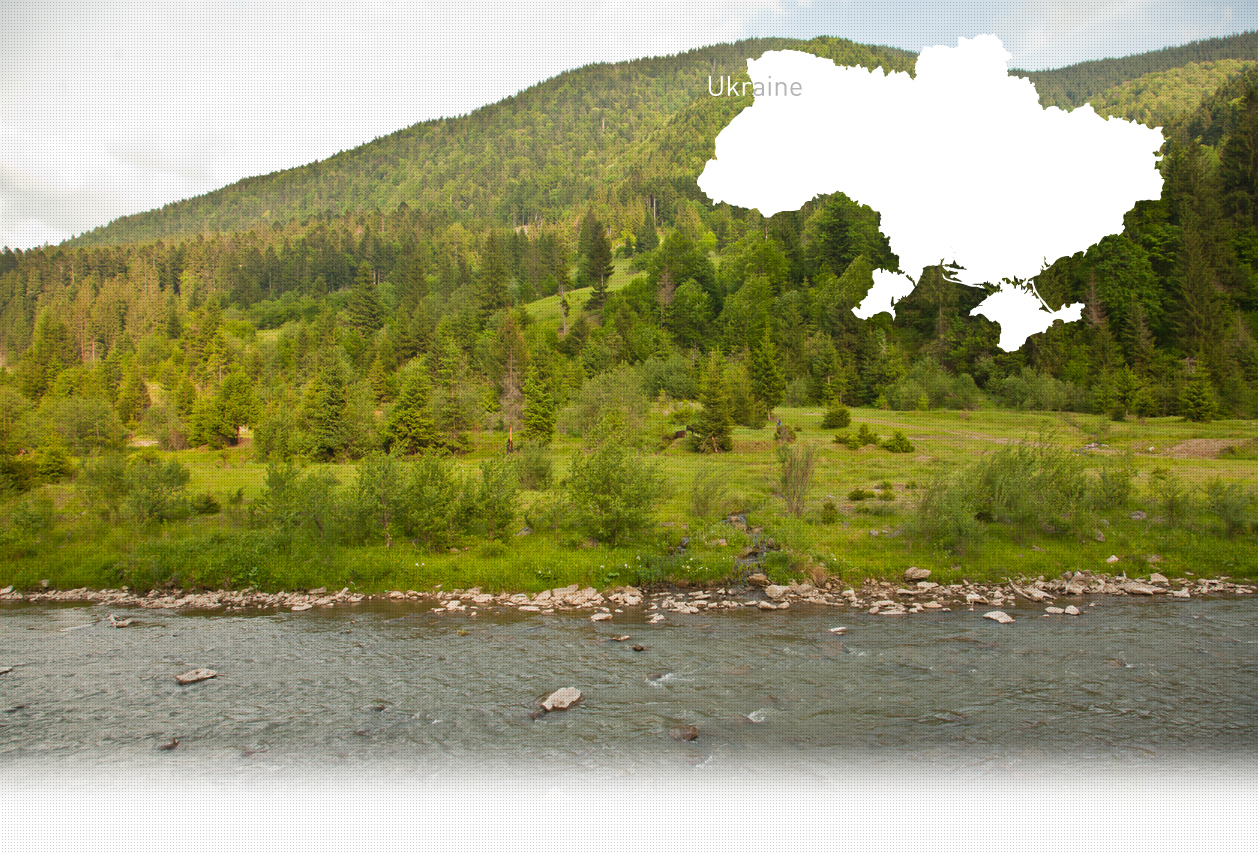
Ivanivka is a village located approximately 37 km (22 mi) from Voznesensk, in southern Ukraine. Before the Second World War, the region formed part of the former Kherson Governorate of the Russian Empire and was later incorporated into the Ukrainian Soviet Socialist Republic.
During the late eighteenth and especially the nineteenth century, the territory underwent extensive state-sponsored colonization and agricultural development. Numerous rural settlements were established as part of imperial policies aimed at cultivating and economically integrating the southern lands. The broader area around Voznesensk was characterized by a multiethnic rural landscape. In addition to Ukrainian villages, the region included Jewish and German agricultural colonies founded primarily in the nineteenth century under imperial initiatives, whose settlers contributed significantly to local agricultural and economic development.
According to local witnesses interviewed by Yahad – In Unum, only two Jewish women, Sonia and Rosa, resided in Ivanivka on the eve of the German occupation. Both are reported to have survived the war.
Ivanivka, as part of Mykolaiv Region, was occupied by German troops in mid-August 1941 and subsequently transferred to Romanian civil administration. Owing to its location along the Southern Bug River—the frontier between the Romanian-administered Transnistria Governorate and the German-administered Reichskommissariat Ukraine—the village constituted a sensitive border zone and experienced the active presence of both occupation authorities.
Archival records indicate that in January–February 1942, between 150 and 210 Jews were deported from Odesa to Yanchelovo (today Ivanivka). They were confined in the buildings of an abandoned farm, including stables, cowsheds, and a sheepfold. Testimonies collected by Yahad describe extremely harsh living conditions: the premises were unheated, no food was distributed, and detainees slept on small amounts of straw brought by local villagers. The site was guarded by local auxiliary police. The Jews were not permitted to leave the barns, although some residents attempted to bring them food clandestinely. According to Olena V., born in 1929, several detainees—particularly elderly individuals—died from cold and hunger.
Among the detainees was a Jewish seamstress. According to Andriy V., born in 1929, villagers were occasionally able to request permission from the guards for her to leave temporarily in order to sew clothing. She had a young son, Osik, aged four or six, who accompanied her and at times spent several nights in Andriy V.’s home.
The shootings began in early March 1942. Archival documents record that at the beginning of March, an SS detachment led by the German officer Ronamus Chaff arrived in Yanchelovo from Novovoskresenka, the administrative center where the Romanian Primăria was located. Fifty Jews were taken outside the village; nine were shot, while the others were robbed and returned to confinement in the stable.
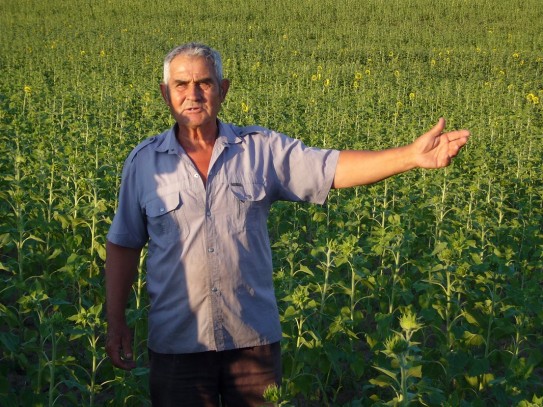
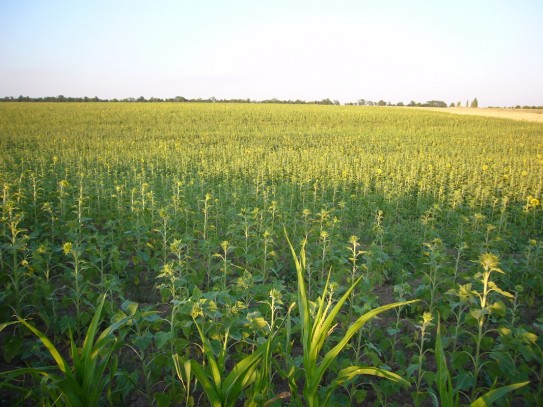
The mass killing followed shortly thereafter. According to Olena V. and Andriy V., the farm buildings stood approximately 300–500 meters from the ravine where the Aktiontook place. Andriy V. recalled that on the eve of the shooting, dry sunflower stalks were placed in the pit and doused with fuel oil. The next day, groups of 20 to 50 detainees were escorted by police from the farm to the ravine, lined up at its edge, and shot. According to his testimony, policemen allegedly promised to spare those who surrendered gold; those without valuables were killed immediately, and those who handed over gold were also executed afterward. Local witnesses stated that the shooting was carried out by Volksdeutsche from a nearby German colony. Hidden several hundred meters away, Andriy V. witnessed the seamstress and her son Osik being brought to the ravine at the very end of the Aktion and shot.
After the killings, fuel oil was poured over the bodies and the pit was set on fire. The corpses reportedly burned for several days.
The exact number of victims remains uncertain. Most sources estimate between 180 and 200 murdered Jews, although some accounts suggest as few as 70, while certain local testimonies cite as many as 300. To date, no memorial marks the site of the massacre.
Do you have additional information regarding a village that you would like to share with Yahad ?
Please contact us at contact@yahadinunum.org
or by calling Yahad – In Unum at +33 (0) 1 53 20 13 17