

2 Killing site(s)
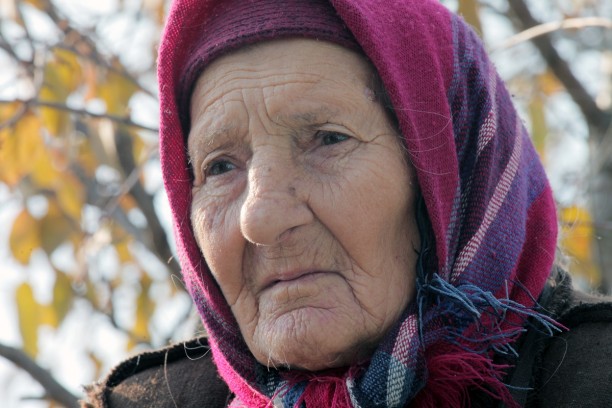
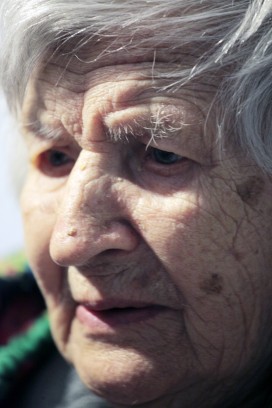
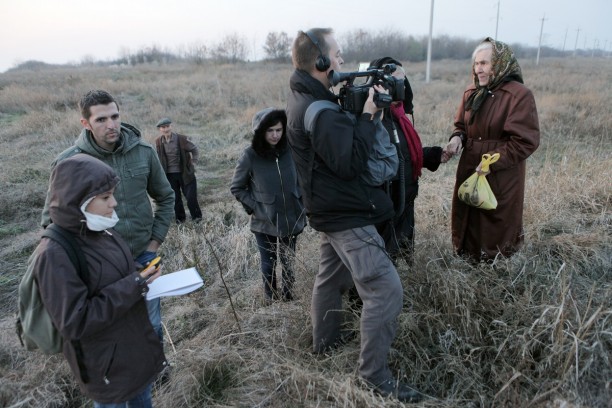
Olena Z., born 1938: "During the summer of 1941, I was at home when I saw a group of ten to fifteen Jews being led past our house by armed men. They stopped in front of our home, where there was a fire hydrant. The guards beat the Jews with nagaikas and sprayed them with water from a fire hose. The Jews were screaming.
Then the group was taken further away. My mother and I followed them out of curiosity,
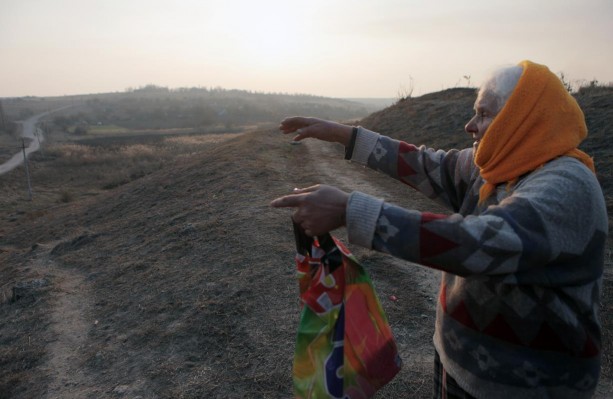
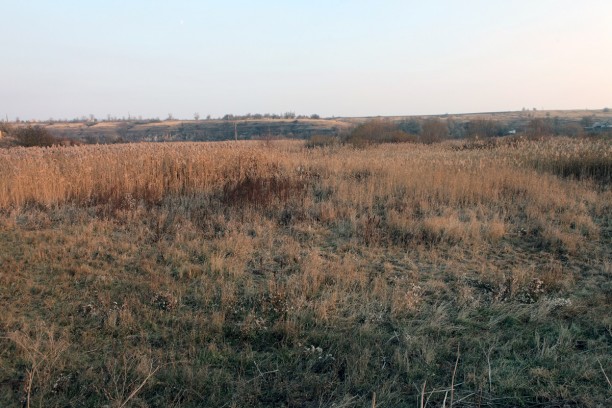
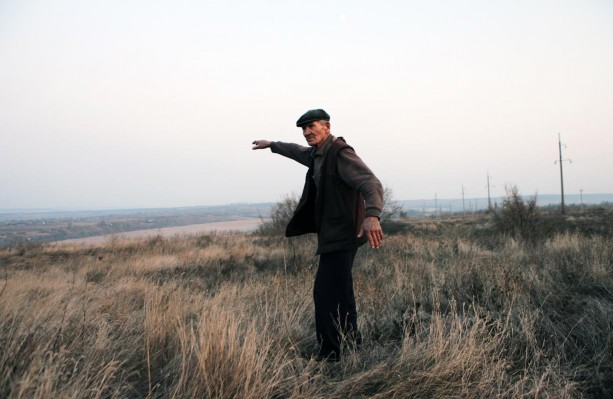
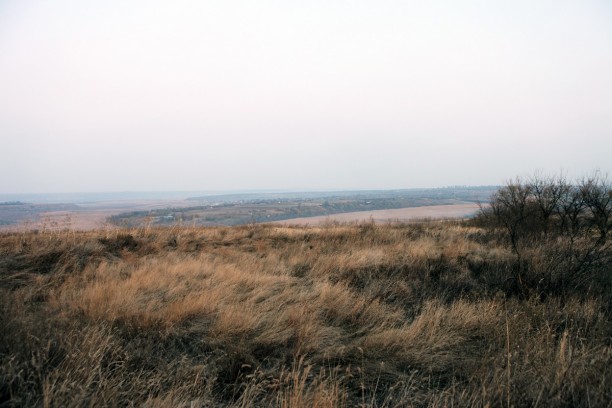
They were taken to a meadow at the foot of a hill about 300 meters from our house. At that time, the meadow was filled with water. The Jews were forced to go down into it and were shot there, in the water, by two or three men armed with automatic weapons. The victims were men, women, and a small boy. It happened quickly. When the shooting was over, the water in the meadow had turned red with blood." (Testimony N°YIU1282U, interviewed in Pokrovka, on November 05, 2011)
"[…] During the occupation of the commune of Pokrovskoïe [today Pokrovka] from 12 August 1941 to 29 March 1944, the German Romanian occupiers committed the following crimes:
1. On August 14, 1941, representatives of the German “SS” army brutally tortured and shot nine Jewish civilians who they had brought from the town of Voznesensk, Mykolaiv region. Among them: a woman about 50 years old, two elderly men about 55 years old, and six young people aged 16–18. Their bodies were thrown into the anti-tank ditch.
[…]
3. On 26 December 1941, the Romanian gendarmerie, led by Plutonier K. and his deputy, Corporal [illegible], brought 800 civilians from Odessa to Pokrovskoïe. They were persons of Jewish nationality, including many teachers, physicians, women with children and infants, and pregnant women, who, despite the severe cold, were confined in an unheated hospital. They received neither food nor water and were subjected to daily beatings with whips, sticks, and rifle butts, which caused the deaths of more than 200 people. Those who remained alive were transferred to Dmitrovka [today Dmytrivka] (7 km from Pokrovskoïe), where they were shot in March 1942. […]" [Act N°2 drawn by State Extraordinary Soviet Commission (ChGK), on June 17, 1944; p.363-366; GARF 7021-68-178/Copy USHMM RG.22-002M]
"[…] During the German Romanian occupation of Pokrovskoïe [today Pokrovka], I lived in the occupied territory, and, from the beginning of the occupation, I worked as a policeman for the municipal administration. Concerning the crimes committed by the German Romanian invaders, I can relate the following:
– In December 1941, the Romanian gendarmerie brought approximately 800 civilians of Jewish nationality from the city of Odesa to Pokrovka and placed them in the hospital premises. Most of them were women and children. We, the policemen (myself, Ivan D., Leonid I., Petro Z. and others whose names I do not know), were assigned to guard them. The prisoners were given no food and were kept in unheated rooms. Moreover, the head of the gendarmerie, Plutonier K., ordered us not to let the prisoners leave the building and not to pass on any food brought by the local population. We carried out these orders and as a result, about 200 people died. Those who remained alive were taken away by the Romanian gendarmerie in March 1942. It appears that they were shot in a ravine near the village of Dmitrovka. I cannot say anything about how the execution was carried out, as I was not present. […]" [Deposition of Vasili Aleksandrovich U., born in 1916, given to State Extraordinary Soviet Commission (ChGK) on June 15, 1944; pp. 367–368; GARF 7021-68-178/Copy USHMM RG.22-002M]
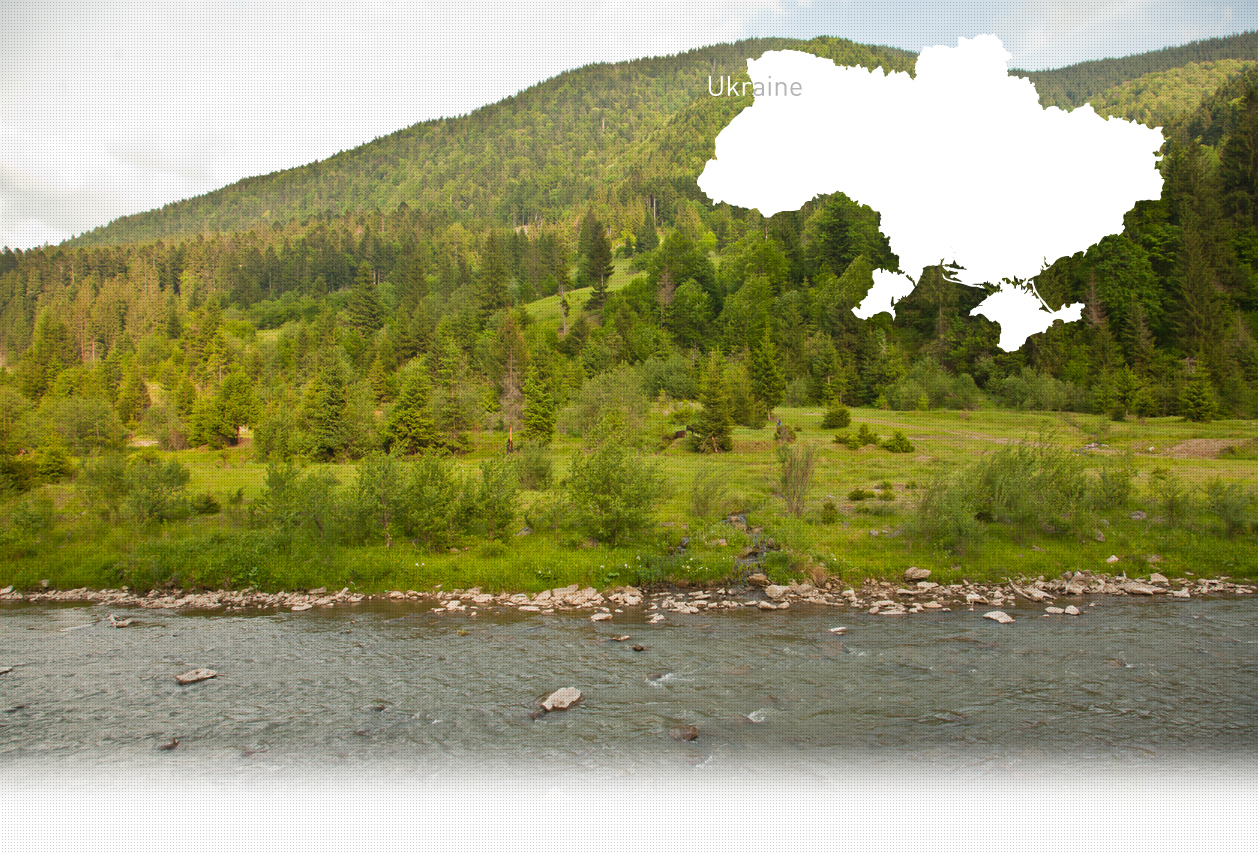
Pokrovka is a village in southern Ukraine, located approximately 30 km (18 mi) southeast of Voznesensk.
Prior to the Second World War, the region formed part of the former Kherson Governorate of the Russian Empire and was later incorporated into the Ukrainian Soviet Socialist Republic. The broader area around Voznesensk included several small shtetls; however, the Jewish presence in Pokrovka itself appears to have been limited in comparison with larger nearby centers such as Voznesensk. Imperial and Soviet census data does not identify Pokrovka as a locality with a distinct or significant Jewish population.
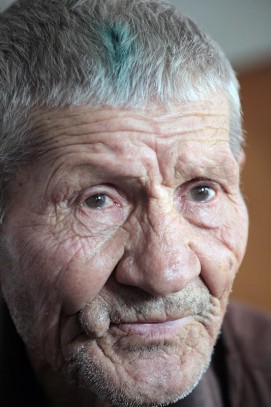
Witnesses interviewed by Yahad – In Unum recall only one Jewish family living in the village before the war. Maria R., born in 1928, and Valentyne Zh., born in 1931, remembered that the father of this family worked as a supplyman in Voznesensk. According to Valentyne Zh., the family’s daughter was adopted by a Ukrainian during the war and survived. The fate of her parents, however, remains unknown to him.
The Voznesensk district was part of the zone of Jewish agricultural colonization established by the tsarist authorities in the 19th century. Jewish families settled in agricultural colonies such as Novopoltavka, Novaya Zhizn (Novokantakuzivka), and in Voznesensk itself. It is therefore plausible that any Jewish families residing in Pokrovka prior to 1941 were linked to, or originated from, these nearby settlement projects.
Pokrovka was occupied by German troops on August 11, 1941. Situated in the Voznesensk District along the Southern Bug River—the frontier between the Romanian-administered Transnistria Governorate and the German-administered Reichskommissariat Ukraine—the village constituted a sensitive border zone and experienced the presence and operations of both occupation authorities.
According to Soviet archival records, the first murder of Jews in Pokrovka occurred on August 14, 1941, when German forces tortured and shot nine Jewish civilians in an anti-tank ditch after bringing them from Voznesensk. Olena Z., born in 1938, recalled witnessing in the summer of 1941 a group of Jews being escorted past her house. She followed them and saw them taken to a flood meadow at the foot of a hill, where they were shot in the water by two or three gunmen using automatic weapons. Among the victims were men, women, and a young boy. Olena remembered that at the end of the shooting “the water turned into blood.” To this day, no memorial marks this killing site.
Archival documents further indicate that on December 26, 1941, approximately 800 Jews from Odesa were transferred to Pokrovka by the Romanian Gendarmerie. Maria R., born in 1928, recalled: “The Jews were brought here in winter; it was freezing outside, and some of them had frostbite on their hands and feet.” Several Yahad witnesses stated that the deportees had arrived on foot, which explains their extreme exhaustion. The group consisted primarily of elderly people, pregnant women, and women with children and infants. They were confined in several buildings of the Pokrovka hospital complex, including the maternity ward, surgery ward, and auxiliary pavilions.
Conditions of detention were severe: unheated premises, extreme overcrowding, lack of food, and intense cold. Olena Z. recalled that the site was guarded by the Romanian gendarmerie, at times assisted by local auxiliary police. Valentyne Zh., born in 1931, stated that the Romanian Kommandantur was located not far from the hospital. Despite the danger, some local residents attempted to bring food clandestinely. Witnesses also attested to violence preceding the killings. Maria R. reported that “the Jews were subjected to atrocious torture.”
These conditions and daily beatings led to the deaths of more than 200 detainees during the winter of 1941–1942. According to testimonies, kolkhoz workers were regularly requisitioned to transport bodies from the hospital to a livestock (cattle) pit. Chlorine was reportedly poured into the pit before it was filled in. To this day, no memorial marks the site of this mass grave, where at least 200 Jews from Odesa who died as a result of mistreatment are buried.
The survivors of the detention in Pokrovka—approximately 600 Jews—were subsequently transferred to Dmytrivka, about seven kilometers away, where they were shot in March 1942.
Do you have additional information regarding a village that you would like to share with Yahad ?
Please contact us at contact@yahadinunum.org
or by calling Yahad – In Unum at +33 (0) 1 53 20 13 17