




1 Sitio(s) de ejecución
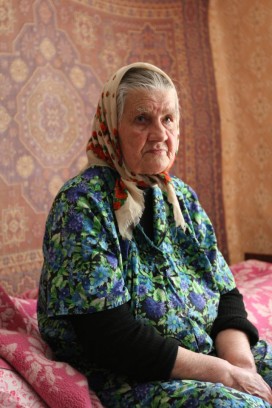
Zinaida S., born in 1931: "I was at a Jewish friend’s house when the Germans came to take them away. The men wore green uniforms and had dogs with them. Only one of them came inside. He didn’t hit anyone, he just gestured with his hand and told them to come out quickly.
They had only a few minutes to grab some things and a bit of food. When we stepped outside, there were already many people in the street. I don’t even know how it happened, but I ended up in the column with them. I hadn’t meant to be there, it just happened. Suddenly I was walking with the Jews who were being taken away to be shot.
The column was very long. We walked five in a row, and there were guards on both sides. The Jews were quiet. No one was shouting. They were leading us toward the lake and the cemetery.
At one point, my friend’s mother leaned toward me and whispered, "Run." I ran. I hid around the corner near the lake and stayed there." (Testimony N°YIU167R, interviewed in Sebezh, on June 1, 2011)
"The witness Nikolai Fedorovich Boreyko testified: "[…] In 1942, in the town of Sebezh, all the Jews were arrested, [including] the elderly people, as well as the children from 1 to 13 years old. It was in winter. All the Jews were rounded up on Nizhnyaya Street, and from there they were led across the lake toward the veterinary clinic. There, they were shot.
The Germans and their collaborators dealt with the Jews without any trial or investigation. They completely exterminated the town’s Jewish population. This is further confirmed by the witness Boreyko Fyodor Evstafyevich, a power plant worker: "In March 1942," he says, "the police carried out the arrest of the Jewish population. All the Jews were driven to Nizhnyaya Street, not far from the house of the police members Tsverkov. At 11 a.m., a crowd of elderly people, women, and children, some completely stripped, others wearing only shirts, was led across the lake under the command of the police chief, Buss. Approximately half a kilometer from the execution site, guards were posted and no one was allowed to approach. On that day, 96 Jews were shot." [Act drawn by State Extraordinary Soviet Commission (ChGK), on December 8, 1944; GARF 7021-20-22, pp. 3-4/Copy USHMM RG.22-002M]
Sebezh is located approximately 130 km (81 mi) west-southwest of Velikiye Luki, along the railway line connecting Moscow and Riga. The earliest evidence of a Jewish presence in Sebezh dates to the early 18th century, after which the community steadily expanded. According to the 1897 census, the town had 2,561 Jewish residents, representing 59 percent of the total population.
Following the First World War, the Jewish population declined to 1,813, slightly more than one-third of the town’s inhabitants. During the interwar period, the community maintained cultural and educational institutions, including a kindergarten and a Yiddish-language school. Most Jewish residents were engaged in commerce and artisanal trades. In the subsequent decades, processes of modernization and industrialization contributed to further demographic decline. By 1939, the Jewish population had fallen to 845 individuals, accounting for 14 percent of the total population.
After the launch of Operation Barbarossa on June 22, 1941, and before the town was captured by German forces, the majority of local Jews either evacuated eastward or were mobilized into the Red Army. It is estimated that only about 15 to 18 percent of the prewar Jewish population remained in Sebezh, primarily women, children, and elderly individuals.
Sebezh was occupied by units of the SS Motorized Division Totenkopf on July 7, 1941 (July 9, 1941, according to other sources). Shortly thereafter, a new administration was established in the town, including a German military commandant’s office (Ortskommandantur), assisted by an auxiliary police unit composed of local inhabitants.
In the first days following the occupation, two Jewish residents were accused of arson and killed. Anti-Jewish measures were swiftly introduced. Jews were required to register, wear armbands bearing the Star of David, and perform forced labor while enduring various forms of humiliation.
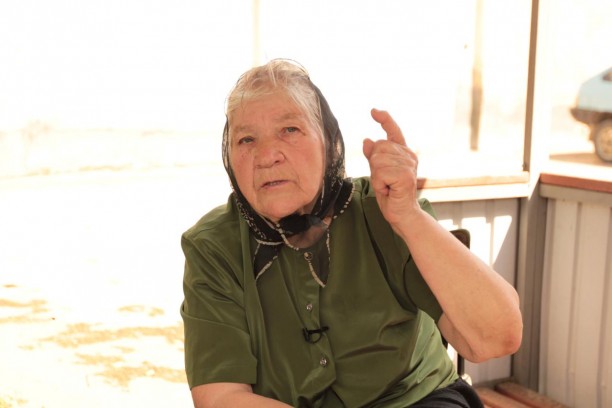
In September 1941, a ghetto was established in Sebezh. Between 100 and 150 Jews were forced to relocate to several two-story buildings on Nizhnyaya and Sovetskaya Streets. According to some sources, approximately 50 Jews from Western Poland, brought to the area for forced labor with the Organisation Todt, were also confined in the ghetto. Testimony collected by Yahad – In Unum from Olga O., born in 1930, indicates that although the ghetto was not physically fenced or permanently guarded, its inmates were subjected to forced labor. Their tasks included digging trenches, chopping wood, and performing cleaning duties at the German hospital, such as washing floors and sweeping the yard.
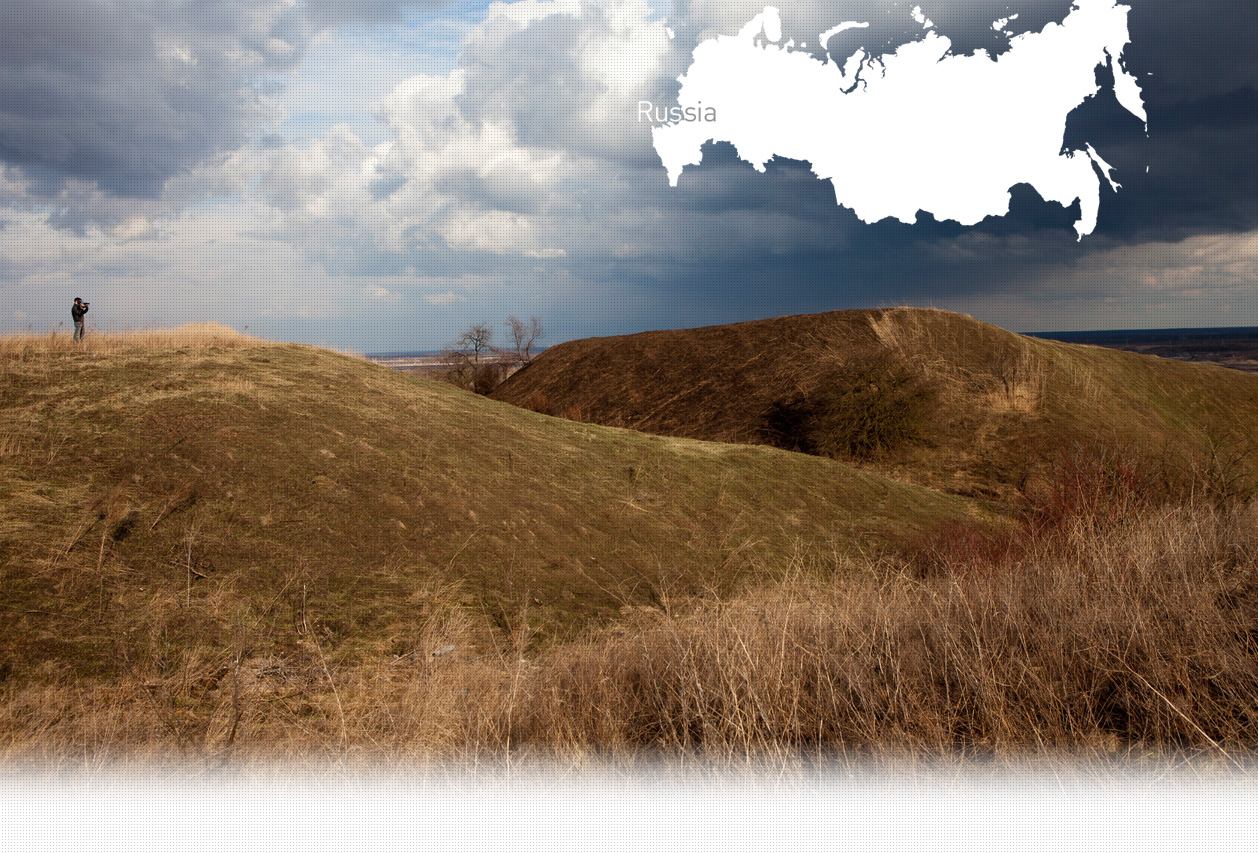
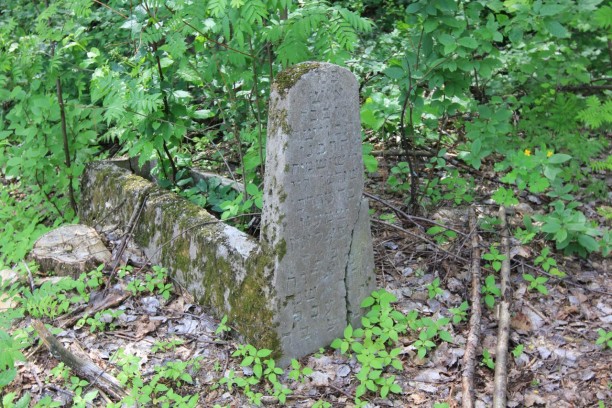
On March 6–7, 1942, or, according to other sources, in late March 1942, the ghetto was liquidated during an Aktion carried out by German forces with the participation of Russian auxiliary policemen. The Jews were first assembled in the town and then taken toward the Veterinary Clinic, to a valley behind the Jewish cemetery, where they were shot. Some victims were completely stripped; others wore only shirts. They were escorted to the killing site by armed guards on foot and in three or four sleighs across the frozen lake. Upon arrival, they were shot—reportedly by Russian policemen under German supervision—and buried in a pre-dug pit. According to available sources, 96 or 97 elderly people, women, and children were murdered that day. One twelve-year-old boy initially managed to escape but was later denounced and killed.
Following the destruction of the Jewish community of Sebezh, the victims’ belongings were looted.
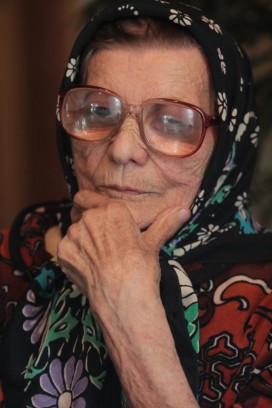
According to testimony collected by Yahad, Zinaida, born in 1929, recalled that prior to the German retreat, an Operation 1005 Aktion was carried out in Sebezh. During this operation, the remains of murdered Jews and Soviet POWs were exhumed and burned by local residents who had been requisitioned for the task.
During the Soviet period, a monument commemorating the Jewish victims of Sebezh was erected at the killing site near the Veterinary Clinic, behind the Jewish cemetery. In 2009, a new memorial was installed at the same location to commemorate the Jewish victims, alongside a memorial dedicated to partisans and Red Army fighters.
¿Tiene información adicional con respecto a un pueblo que le gustaría compartir con Yahad?
Por favor contáctenos a contact@yahadinunum.org
o llamando a Yahad – In Unum at +33 (0) 1 53 20 13 17