


1 Killing site(s)
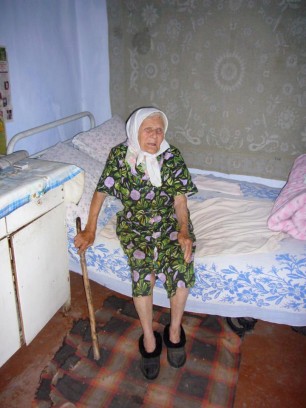
Anastasia H., born in 1918: "About one hundred Jews were brought here during the winter and placed in the building that had once served as the kolkhoz garage for agricultural vehicles. It was freezing cold. Villagers brought them straw so they would at least have something to sleep on. The situation was terrible. Many suffered from frostbite because some were still wearing summer clothes and shoes in the middle of winter.
They stayed there throughout the winter. Sometimes they came to our house, and I gave them a small piece of mamalyga. We ourselves had very little, but I felt sorry for them, especially when they came with children, because I also had a baby at that time.
I remember that toward the end of winter or at the beginning of spring, one evening, I heard gunfire. It went on for quite a long time and was terrifying. I lay over my baby so he would not hear the shooting, and I tried to cover my own ears as well." (Testimony N°YIU352U, interviewed in Buzovarove, on July 25, 2006)
"[…] In December 1941, German soldiers brought 140 Jews from the city of Odesa to the village. Upon arrival, the deportees were in extremely poor condition. It was freezing cold, and they lacked warm clothing; some were barefoot, hungry, exhausted, and bore signs of physical abuse. Many suffered from frostbite on their hands, feet, and faces, and several died as a result of these conditions.
The deportees were confined in a large, unheated barn. Detention conditions were harsh: they were not permitted to enter the village, and local residents were forbidden from providing them with food. The barn was guarded by local police officers from Buzovarovo (today Buzovarove) under the supervision of gendarmes.
On March 3 or 4, German settlers led by a German officer escorted the remaining Jews outside Buzovarovo, where they were shot. The following day, Romanian forces transported hemp to the site and burned the bodies.
Archival records also indicate that approximately 500 Roma inhabitants of Buzovarovo died from hunger and cold during the occupation. […]" [Deposition of Zhora Filipovich Korolenko, born in 1917, given to State Extraordinary Soviet Commission (ChGK) on June 17, 1944; pp. 408–409; GARF 7021-68-178/Copy USHMMRG.22-002M]
"[…] In December 1941, German gendarmes brought 140 Jews from the city of Odesa to Buzovarove, the majority of whom were women and children. Upon arrival, the deportees were confined in an unheated barn. During their detention, Romanian gendarmes confiscated watches, jewelry, and other valuables from the prisoners.
In early March 1942, all the detainees were taken outside Buzovarove and executed. According to available records, the victims were forced to strip to their underwear prior to the shooting. The executions were carried out in groups of three: three individuals were lined up and shot, followed by the next group.
The shootings were conducted by German settlers under the command of a German officer. On the day following the execution, Romanian personnel brought hemp to the site and burned the bodies […]" [Deposition of Drozd Maria Petrovna, born in 1905, given to State Extraordinary Soviet Commission (ChGK) on June 17, 1944; pp. 410–411; GARF 7021-68-178/Copy USHMMRG.22-002M]
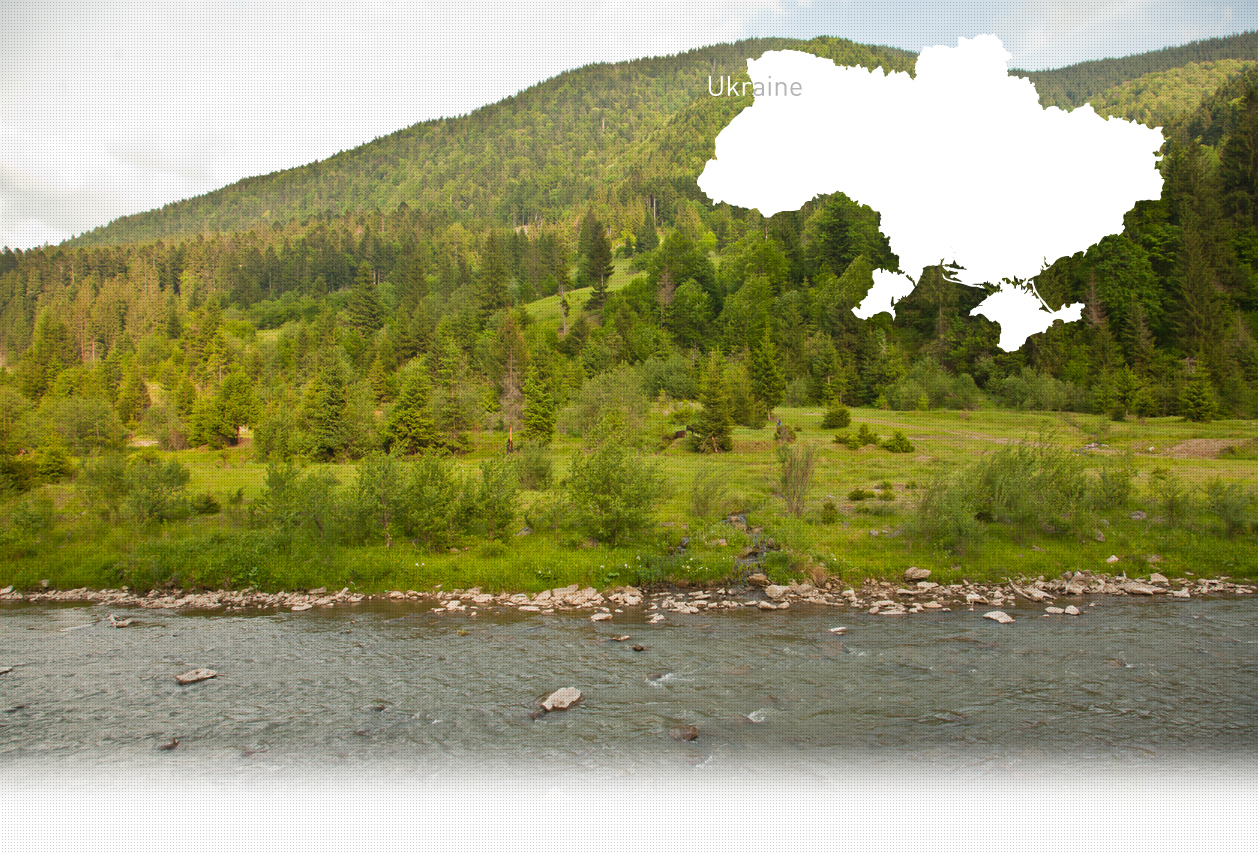
Buzovarove is a village in the Mykolaiv region of southern Ukraine, located approximately 32 km (20 mi) from the town of Voznesensk. The village was founded in the late nineteenth century during the agricultural colonization of the southern steppe regions of the Russian Empire.
After the Revolution, Buzovarove became part of the Ukrainian Soviet Socialist Republic, which was incorporated into the Union of Soviet Socialist Republics (USSR) in 1922.
No established Jewish community has been documented in Buzovarove prior to the Second World War, either in available census records or in the recollections of local inhabitants.
Buzovarove was occupied in August 1941 during the Wehrmacht’s advance into southern Ukraine. It was subsequently incorporated into the Reichskommissariat Ukraine, the German civilian administration that governed the area between 1941 and 1944.
Archival documentation indicates that in December 1941, 140 Jews from Odesa were brought to Buzovarove by German occupation authorities and confined in an unheated barn. Depositions collected in 1944 by the State Extraordinary Soviet Commission (ChGK) state that the deportees consisted predominantly of women and children who arrived in a condition of extreme physical exhaustion. Inadequately clothed despite severe winter temperatures, many suffered from advanced frostbite, and several reportedly died shortly after arrival as a result of exposure, hunger, and mistreatment.
Witness testimonies collected by Yahad - In Unum substantially corroborate these archival findings while providing insight into the lived experience of confinement. According to Liubov N., born in 1927, Jews were held in improvised detention facilities within agricultural buildings. Similar conditions were described by Anastasia H., born in 1918, and Mykola D., born in 1936, who recalled that barns, garages, and kolkhoz storage structures lacking heating served as temporary holding sites. In an attempt to mitigate the extreme cold, some local residents brought hay on which detainees could sleep, a detail remembered by Liubov N. that illustrates limited forms of civilian assistance despite occupation restrictions.
Although certain archival sources emphasize prohibitions against aiding Jewish detainees, witness testimonies suggest that some prisoners were able to enter the village to seek or barter for food. Both documentary and oral evidence indicate that the detainees remained under constant guard by local police operating under German and Romanian supervision, reflecting the multilayered structure of occupation authority in the region.
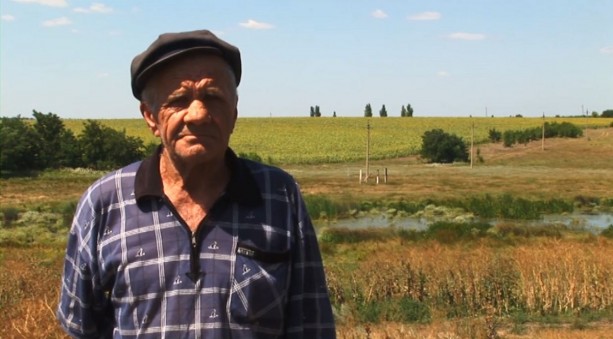
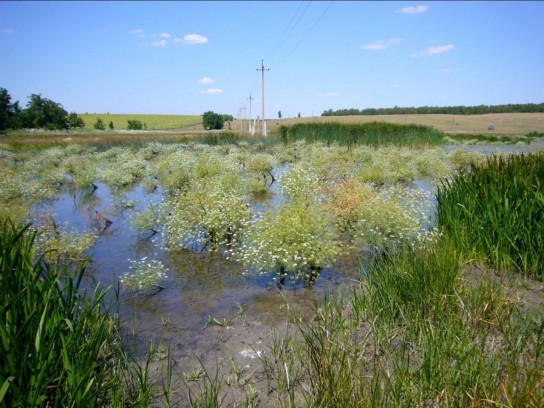
On March 3 or 4, 1942, the Jewish detainees were executed at a former clay quarry on the outskirts of Buzovarove. According to the recollections of Liubov N., Anastasia H., and Mykola D., the victims were escorted to the site in the evening under armed guard. Testimonies describe an organized execution procedure: victims were forced to wait near the pit before being called forward in small groups and shot at the edge. Several witnesses reported hearing repeated bursts of automatic gunfire from their homes.
According to Mykola T., born in 1931, the shootings were carried out by German colonists originating from Rodstat under the command of a German officer, with assistance from local auxiliaries. Archival depositions further indicate that the victims were stripped of clothing and valuables prior to execution, after which these items were confiscated by occupation personnel.
Evidence also indicates that measures to conceal the crime were implemented immediately. Both archival records and eyewitness testimonies report that hemp or hay was brought to the site the following day and used to burn the victims’ bodies. According to Liubov N., local residents were subsequently requisitioned to cover the burned remains with earth and ashes. Returning to the site shortly afterward, Mykola D. observed these operations directly, practices consistent with broader German efforts to conceal mass executions later systematized under Operation 1005.
Material traces of the massacre remained visible for years. As recalled by Mykola D., fragments of clothing, shell casings, jewelry, and other personal belongings continued to surface at the killing site long after the executions.
Today, no memorial marks the site of the killings in Buzovarove.
Do you have additional information regarding a village that you would like to share with Yahad ?
Please contact us at contact@yahadinunum.org
or by calling Yahad – In Unum at +33 (0) 1 53 20 13 17